Blog
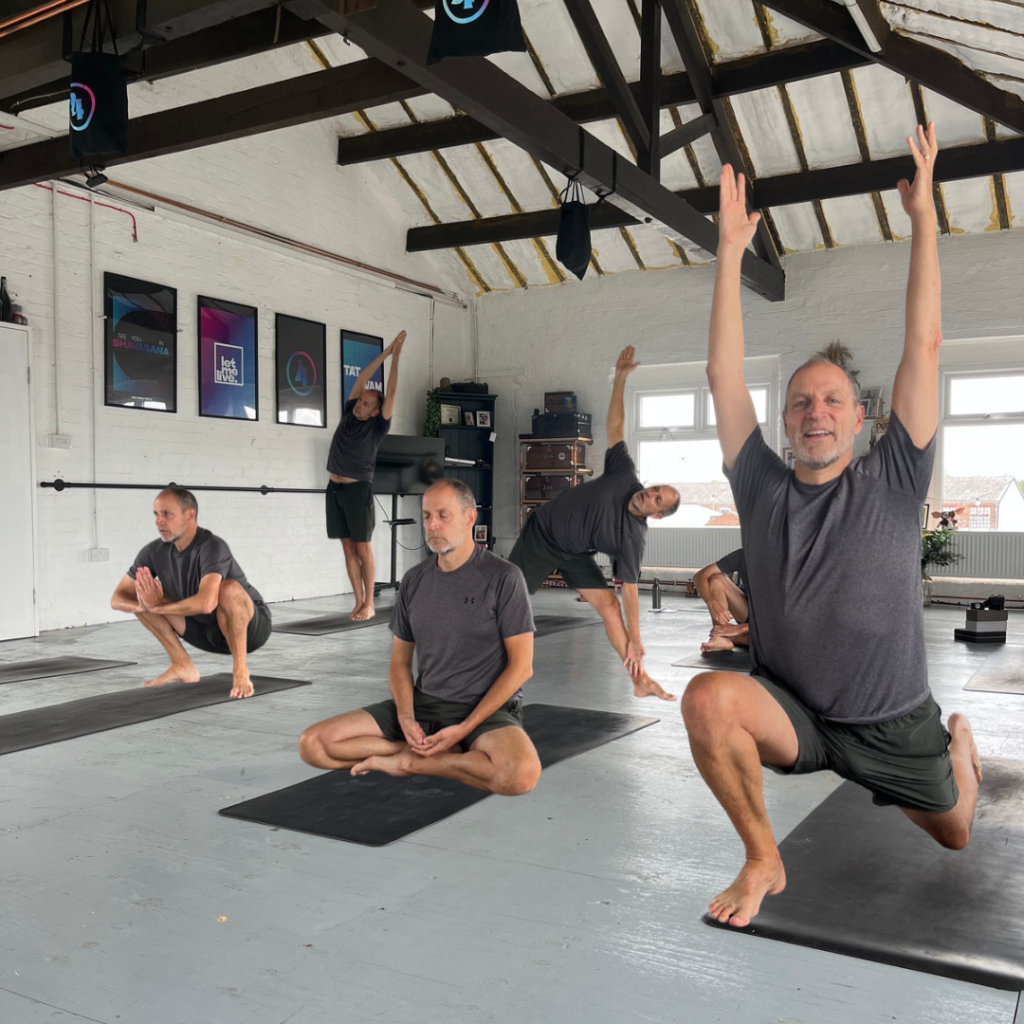
Do you look at pictures of people doing yoga and wonder how on earth they get themselves into those positions? Perhaps you struggle to touch your toes, have tight hamstrings, a stiff back or hips that don’t seem to want to move. You might even think that yoga is something you should try once you’ve become a bit more flexible.
If that sounds familiar, you’re certainly not alone.
One of the first things people tell me when they come to a yoga class for the first time is that they’re the least flexible person in the world. They often say it with a slightly apologetic smile, as though they should have done some preparation before turning up.
My response is usually quite simple: that’s absolutely fine. In fact, you’ve come to the right place.
You don’t need to be flexible to start yoga. Improving your flexibility is one of the reasons to practise it in the first place.
I’ve been practising yoga and meditation for over 25 years and teaching for more than 15. When I first started, I had tight hamstrings, lower back issues and plenty of stress. I wasn’t particularly flexible, and I certainly couldn’t get into some of the positions I saw in yoga books.
But that wasn’t the point. Yoga gave me a way to work with my body, improve how I felt and, just as importantly, find a little more calm and ease in everyday life.
So, if you’re wondering whether you’re too stiff to start yoga, here’s what I’d like you to know.
1. You don’t have to touch your toes to do yoga
Let’s get one thing out of the way. Being able to touch your toes is not a qualification for doing yoga.
Neither is being able to sit comfortably on the floor with your legs crossed, put your foot behind your head or balance on one hand.
Some of the images we see of yoga can give a rather misleading impression of what a typical yoga class involves. Social media and glossy photographs tend to show people in impressive, sometimes extraordinary, positions. It’s understandable that you might look at them and think, “Well, that’s not for me.”
But yoga isn’t a flexibility competition.
The purpose of practising yoga is not to achieve a particular shape with your body. It’s about developing awareness, working with your physical capabilities and learning to move in a way that supports your wellbeing.
If you can only reach your knees when bending forwards, that’s where you start. If your hips are tight and sitting cross-legged is uncomfortable, you find another position. If your hamstrings feel restricted, you work within a comfortable range.
There’s no need to force anything.
The important thing is to work with the body you have today, rather than comparing it with somebody else’s.
2. Flexibility is something you develop, not something you need to have
Flexibility varies enormously from person to person. Some people are naturally more mobile, while others have always felt a little stiff. Our bodies are also affected by how we spend our days.
If you sit at a desk for hours, spend a lot of time driving or have a relatively sedentary lifestyle, you may find that certain parts of your body become less mobile.
Age can play a part too. As we get older, maintaining mobility, strength and balance becomes increasingly important.
The good news is that the body can adapt.
With regular, appropriate movement, you can gradually improve your range of movement and become more comfortable in positions that might previously have felt restricted.
Yoga works with different areas of the body, including the hips, hamstrings, shoulders, spine and ankles. Through a combination of postures, movement and breathing, you begin to explore how your body moves and where you might be holding tension.
You don’t need to push hard to make progress. In fact, forcing a stretch can be counterproductive. The aim is to find a comfortable level of sensation, breathe naturally and allow the body time to respond.
Over time, you may notice that you can reach a little further, move more freely or simply feel less stiff when getting out of bed in the morning.
And here’s a little tip: if you can’t touch your toes, try bending your knees. There’s no prize for keeping your legs straight!
3. Yoga is about more than stretching
It’s easy to think of yoga as a series of stretches, particularly if improving flexibility is your main reason for wanting to try it.
But there’s quite a lot more to it. Read my blog What is Yoga About Really? to find some video practices you can follow.
In my teaching, I think about yoga through three interconnected elements: Movement, Mind and Meaning.
Movement – working with the body
Yoga postures, or asanas, help us explore movement, flexibility, strength, balance and physical awareness.
Some postures involve stretching, while others involve strengthening muscles and developing stability. We work with different parts of the body, gradually building confidence and familiarity with movement.
It’s not about getting into the deepest possible version of a posture. It’s about understanding what your body is doing and finding a version that works for you.
Mind – working with the breath
Breathing is an important part of yoga.
When we’re stressed or rushing around, our breathing can become shallow and hurried. By bringing some awareness to the breath, we can begin to settle the nervous system and create a little more space between ourselves and the constant activity of the mind.
In class, we use simple breathing practices, alongside movement, to help develop awareness and encourage relaxation.
Meaning – looking beyond the physical
Yoga also offers an opportunity to explore some of the bigger questions about how we live.
What really matters? How do we deal with stress? How can we become more comfortable in our own skin?
You don’t need to be particularly spiritual or have any interest in yoga philosophy to enjoy a class. But I think it’s useful to recognise that yoga can offer much more than a way to stretch tight muscles.
For me, the main thing is to live a relaxed life and be at ease. Yoga provides a toolbox of practices that can help us work towards that.
4. What if I’m worried about keeping up with everyone else?
This is another common concern, particularly if you’ve never been to a yoga class before.
You might imagine walking into a room full of experienced yogis who all know exactly what they’re doing, while you’re struggling to work out which way your arms and legs are supposed to go.
It’s an understandable worry, but a friendly beginner’s class shouldn’t be like that.
In my Thursday morning Hatha yoga class in Stockport, people have different levels of experience and different reasons for coming along. Some want to improve flexibility, others are interested in strength and mobility, while many simply want an hour away from the demands of everyday life.
The important thing is that you work at your own pace.
There is no expectation that everyone will perform a posture in exactly the same way. I’ll explain the movements, offer guidance and encourage you to find a comfortable position.
You can rest when you need to, modify a posture or simply observe if something doesn’t feel right.
And don’t worry if you don’t remember all the instructions. Nobody expects you to know everything straight away.
Yoga is a practice. You learn by doing it, and there’s no need to get everything right on your first visit.
5. Can yoga help with a stiff back and tight hamstrings?
Many people come to yoga because they feel stiff, particularly around the lower back, hips and hamstrings.
Perhaps you spend a lot of time sitting at work or driving. Maybe you enjoy running, cycling or going to the gym but find that your body feels a little restricted afterwards.
Or perhaps you’ve simply noticed that everyday movements aren’t quite as easy as they used to be.
Yoga can provide a useful way to work on mobility, strength and body awareness.
For example, a balanced Hatha yoga practice might include:
- Gentle movements to mobilise the spine.
- Postures that work with the hips and hamstrings.
- Exercises to develop core strength and stability.
- Movements that improve shoulder mobility.
- Standing postures to develop balance and leg strength.
- Breathing and relaxation to help release unnecessary tension.
The combination of strength and mobility is important. Flexibility on its own isn’t the whole story. We also want to develop the strength and control to move comfortably through the available range.
Back care is another important part of my teaching. I’ve completed the Yoga for Healthy Lower Backs training and use what I’ve learned in my Thursday classes and one-to-one sessions.
The approach is practical and focuses on helping people understand their backs, build confidence in movement and develop useful ways to manage their symptoms.
Of course, yoga isn’t a substitute for appropriate medical advice. If you have persistent or severe pain, a recent injury or a medical condition affecting your movement, it’s sensible to speak to a healthcare professional before starting. A good teacher should also be happy to discuss any concerns and help you find an appropriate approach.
You can read more about this in my article on yoga for back care.
6. How quickly will I become more flexible?
This is a difficult one to answer because everybody is different.
Some people notice a difference in how their body feels after their first class. They might feel less tense, more relaxed or simply more aware of how they move.
Physical changes in flexibility and strength tend to develop gradually with consistent practice.
It depends on a number of things, including your starting point, how regularly you practise, your general activity levels and how your body responds.
I’d encourage you not to get too caught up in measuring progress by how far you can stretch.
Instead, notice the smaller changes.
Perhaps you can bend forwards a little more comfortably. Maybe turning your head feels easier, or you find it less awkward getting up from the floor. You might notice that your shoulders aren’t quite so tight after a day at your desk.
You may also find that you sleep better, feel more relaxed or are less caught up in the usual mental chatter.
These are all worthwhile changes.
And remember, flexibility isn’t something you achieve once and then keep forever. It’s something you maintain through regular movement and looking after yourself.
7. A few tips before your first yoga class
If you’re thinking about giving yoga a go, here are a few simple things to bear in mind.
Wear comfortable clothing. You don’t need specialist yoga clothing. Loose-fitting or stretchy clothes that allow you to move comfortably are absolutely fine.
Don’t eat a large meal immediately beforehand. It’s generally more comfortable to practise when you haven’t just eaten. I’d wait for 2 hours after a meal before practicing yoga.
Arrive a little early. This gives you time to settle in, meet the teacher and mention anything that might be useful for them to know.
Bring an open mind. You don’t need to know the names of the postures, understand yoga philosophy or have any previous experience.
Listen to your body. You should never feel that you have to force yourself into a position. Work within your comfortable range and let the teacher know if something doesn’t feel right.
Don’t compare yourself with others. Everyone has a different body, different abilities and a different reason for being there. Your practice is your own.
Most importantly, give it a chance. You might find that you enjoy it rather more than you expected.
8. Come and try Thursday morning Hatha yoga in Stockport
If you’ve been thinking about trying yoga but have been putting it off because you’re stiff, inflexible or unsure what to expect, I’d love to welcome you to a class.
I teach a friendly, practical Hatha yoga class every Thursday morning at 10am at 4NT Yoga Studio in Stockport.
The one-hour session combines traditional yoga postures, breathing practices and meditation. We work on flexibility, mobility, strength and balance, while also making time to slow down, relax and quieten the mind.
The class is suitable for complete beginners as well as people who have been practising for years. You’ll be encouraged to work at your own pace, and there’s no expectation that you should be able to perform every posture.
You don’t need to be flexible. You don’t need to be particularly fit. And you certainly don’t need to be able to touch your toes.
All you need is a willingness to give it a go.
Thursday morning Hatha yoga
- Time: Every Thursday, 10am
- Duration: One hour
- Venue: 4NT Yoga Studio, The Loft, Swallow Mill, Swallow Street, Stockport, SK1 3HJ
- Suitable for: Beginners and experienced practitioners
Find out more about Thursday morning Hatha yoga in Stockport and book your place.
If you’re still unsure whether a group class is right for you, I also offer one-to-one yoga and meditation sessions, where we can work around your individual needs.
So, are you too stiff to start yoga?
Absolutely not.
In fact, being stiff, having tight hamstrings or finding it difficult to move comfortably can be perfectly good reasons to start.
Yoga isn’t about achieving an impressive posture or trying to turn yourself into somebody else. It’s about working with the body you have, developing strength and mobility, becoming more aware of how you feel and finding ways to look after yourself.
You might come along because you want to touch your toes. You might be looking for some help with a stiff back or shoulders. Or perhaps you simply want to find an hour in the week when you can stop rushing around and take a breath.
Whatever brings you to the mat, there’s room to start where you are.
And who knows? With a little practice, you might even find those toes aren’t quite so far away.
But if they are, don’t worry. Bend your knees!