Blog
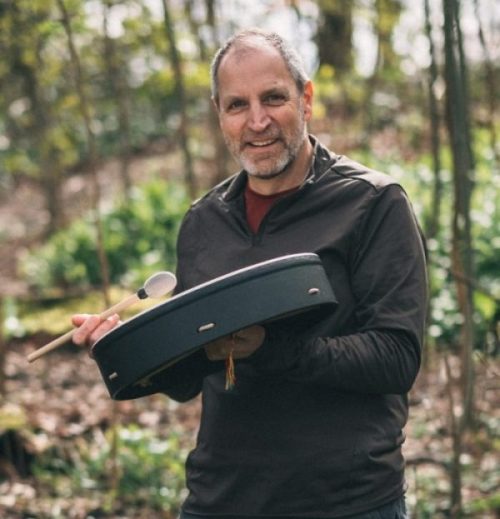
Over the past twenty-five years or so I’ve explored a fair few wellbeing practices — yoga, meditation, energy work, tantric approaches, and plenty more besides. Some have stayed with me, some have fallen away. Shamanic journeying, though, has been one of the most quietly transformative practices I’ve come across.
This blog is based on a workshop I recently lead which was inspired by Experiencing the Shamanic Journey by Sandra Ingerman, whose work presents shamanism in a grounded, accessible way. No robes, no pretending to be someone you’re not — just a simple, ancient practice that still works remarkably well in the modern world.
Shamanism is often described as one of the oldest spiritual practices known to humanity. Archaeologists and anthropologists suggest it goes back at least 100,000 years, and what’s striking is how it appears — in different forms — across cultures worldwide. That tells us something important: this isn’t a passing trend, it’s part of the human operating system.
The word shaman comes from the Tungus people of Siberia and roughly translates as “one who sees in the dark”. Sometimes it’s interpreted simply as “healer”. Either way, it points to the ability to sit with uncertainty, mystery and the unknown — something most of us have been trained to avoid.
Which brings us neatly to the word weird.
In Old English, wyrd meant fate, destiny, or the deeper pattern of a person’s life. It wasn’t an insult — it described something powerful and unavoidable. Somewhere along the line, the word turned into something dismissive. Personally, I think we should reclaim it. If you’re ever called weird, take it as a compliment. I certainly do.
Ceremony Without the Fuss
Shamanic journeying does involve ceremony, but it’s important not to overthink it. The ceremony is the gate — not the destination.
Traditionally, the practice begins by “opening the directions”: West, North, East, South, Mother Earth and Father Sky. Some cultures also acknowledge the spirit within. This isn’t about getting it “right” — it’s about marking a shift in awareness, stepping out of everyday thinking and into something more spacious.
And just to add, that shift in awareness is traditionally supported in many cultures by the steady beat of a drum. The rhythm helps the mind settle and makes it easier to move out of everyday thinking. Some traditions also work with plant medicines such as psilocybin or ayahuasca, though that isn’t something I have personal experience of, and it isn’t part of this work.
Shamanism isn’t just a collection of techniques for getting spiritual information. At its heart, it’s a way of living — in relationship with nature, with each other, and with the parts of life that can’t be measured or controlled.
Two Lessons That Changed Everything
There are two big lessons shamanic practice has taught me.
The first is setting intention.
Before any journey — whether it’s a shamanic journey, a road trip, a new business idea or a change in how you live — you need to know why you’re going. Without intention, you don’t know when you’ve arrived, or even what direction you’re heading in.
The second lesson is accepting the unknowable.
We’re trained to analyse, categorise and explain everything. That works well — until it doesn’t. When life throws something at us that can’t be solved logically, the mind ties itself in knots. Those knots often show up as stress, anxiety or low mood.
The way through isn’t to stop thinking — that rarely works — but to stop identifying so closely with our thoughts. To become the observer rather than the commentator.
For me, the quickest way back to that place is nature. Sitting by a river, listening to the water move, it genuinely feels like tangled thoughts get rinsed out. You don’t have to understand the river. You just let it do its thing.
Yoga calls this Ishvara Pranidhana — surrendering the outcome. Christianity phrases it as “Thy will be done.” A Buddhist teacher once summed it up perfectly: “Non-mind, no problem.”
In shamanic language, we become the hollow bone — clear enough for something bigger to move through us without the ego getting in the way. And if we’re honest, most problems start when the ego insists on driving.
I won’t mention any world leaders here but all I can say is to lead, they must be followed.
Trust Your Own Experience
Shamanic journeying can feel completely bonkers — but then again, so is much of what we call “normal life”.
The focus isn’t on what anyone else is experiencing. It’s about your relationship with the power animals and spirit guides — your direct experience.
In groups, it’s tempting to compare:
“Am I doing it right?”
“They seem to be seeing more than me.”
That comparison kills the magic.
Think of it like dancing with an invisible partner. If you keep looking around the room to see how everyone else is moving, you miss the dance entirely. Stay with your own rhythm. Trust that whatever shows up is exactly what’s meant for you. Have the courage to dance like no-ones watching.
Direct Revelation (No Middlemen)
One of the strengths of shamanism is that it’s based on direct experience. There are no rulebooks carved in stone and no authority figures telling you what your experience should mean.
Spirits communicate in all sorts of ways — images, feelings, sounds, sensations, gut knowing, or sometimes just silence. Some people “see” things clearly. Others don’t see anything at all but feel deeply changed. All of it counts.
If you ever wonder, “Was that supposed to happen?” — the answer is yes.
The key is awareness and openness. Stay curious.
Don’t Forget to Laugh
One thing often overlooked in spiritual practice is humour.
Indigenous shamans laugh a lot. They understand that laughter opens the heart, and the heart is where real connection happens. Take things too seriously and everything shuts down.
So laugh — at yourself, at me, at the sheer strangeness of being human. The spirits, if we’re using that language, have a great sense of humour.
A Word for the Rational Mind
Most of us were taught to mistrust anything we can’t measure. So if your rational mind pipes up saying, “You’re making this up,” don’t argue with it.
Just smile and say, “Yes. I probably am.”
Then carry on.
That simple move frees up huge amounts of energy and allows imagination — the bridge between worlds — to do its job.
In Closing
Yoga and meditation are excellent ways to prepare the body and mind for shamanic journeying. Ceremony opens the door, intention sets the direction, and trust keeps you moving.
Most importantly, don’t confine the practice to a twenty-minute journey. Let it inform how you live, how you listen, how you walk through the world.
Become the hollow bone — and see what flows.
Want to find out more?
If something in this blog has sparked your curiosity — or simply left you with a sense of “I’d like to experience that for myself” — you’re very welcome to get in touch.
I offer guided shamanic journey sessions and workshops for people who want a direct, grounded experience rather than theories or beliefs. No prior experience is needed — just an open mind and a willingness to explore.
You can also read my blog article, where I go into more depth about the practice, what to expect, and how shamanic journeying can be integrated into everyday life in a practical, meaningful way.
If you’d like to talk things through, ask questions, or book a session, drop me a message. Sometimes the best way to understand a practice like this is simply to experience it.