Blog
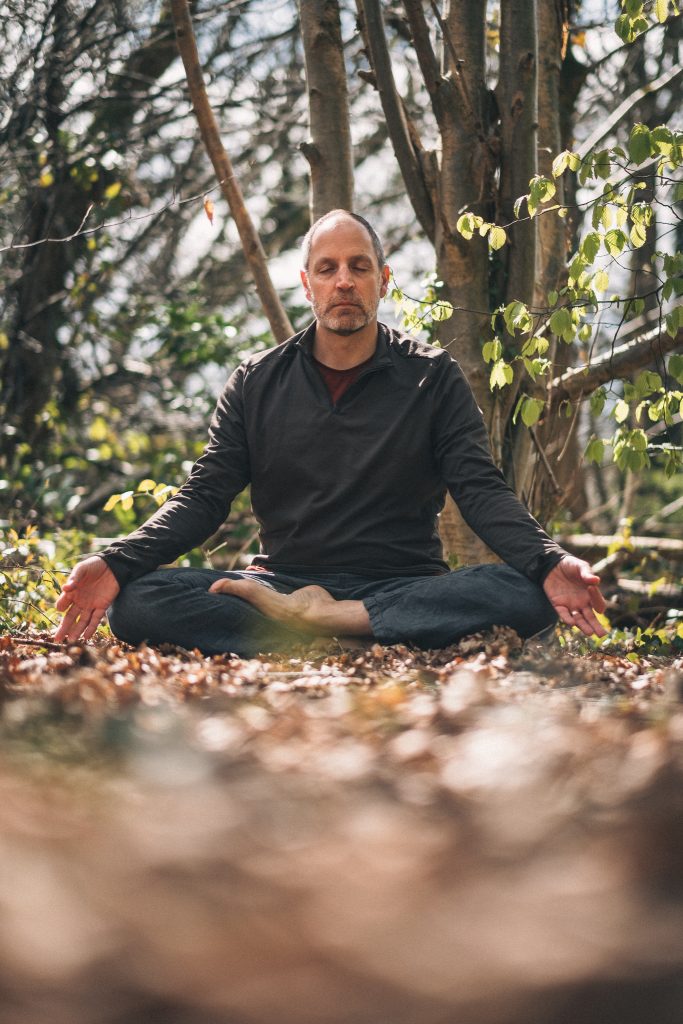
This blog accompanies my workshop Setting Intentions from the Heart, and it reflects the same three pillars that underpin all of my teaching and practice: Movement, Mind, and Meaning.
The structure of the workshop is deliberately simple. We begin by settling into the space, using gentle yoga postures to open the body. From there, we move into easy, accessible breathwork, and then into meditation. The flow is from the obvious and physical to the quieter and more subtle. Throughout, the focus is on the heart space – not in a sentimental sense, but as a place of felt awareness.
The intention isn’t to decide something clever or ambitious. It’s to create the right conditions for the body and mind to soften, so that whatever really matters has a chance to surface.
Do We Set Intentions – or Do They Arise?
In modern wellness culture, intention-setting is often treated like a goal-setting exercise. Everyone gets pumped up, decide what they want, phrase it positively, focus hard, and off they go. Sounds exhausting to me!
There’s nothing wrong with clarity or commitment, but yoga asks a more awkward question:
Do we genuinely set intentions, or do they arise when the conditions are right?
If intention is a conscious act of will, then who exactly is doing the choosing? And how free is that choice, really?
This line of inquiry unsettles the idea that the thinking mind is in charge. It nudges us towards a more honest view of how life actually works.
Intention and the Illusion of Control
Here’s the uncomfortable bit. None of us chose our genes, our early environment, or the nervous system we inherited. Our habits, fears, preferences, and coping strategies were shaped long before we had any say in the matter.
From that angle, many of our “choices” are less about free will and more about momentum.
Yoga doesn’t present this as a problem to fix. It treats it as an invitation to humility. If we are not the sole authors (or pardon the pun – soul authors) of our thoughts and impulses, perhaps intention isn’t something we force into being. Perhaps it’s something we learn to listen for.
That shift alone changes the tone of practice. Control softens. Effort becomes curiosity. And intention stops being a mental command and starts to feel like a quiet alignment.
Movement: Opening the Body to Open Awareness
The first pillar, movement, is the foundation for everything else.
In yoga, physical postures aren’t really about flexibility, strength, or looking impressive in Lycra. They’re about creating conditions. Conscious movement releases unnecessary tension, steadies the nervous system, and brings awareness into the body.
As a side note – strength and flexibility are a by-product and as I always say, help us to sit quietly with no fidgeting. Ok I admit it, I do fidget at times, I’m only human.
Modern research backs this up. Body and mind aren’t separate departments; they’re part of the same operation. When the body is tense or braced, perception narrows. When movement is freer, awareness widens.
As the body opens, we become more sensitive to sensation, breath, and subtle feedback. Intention, at this point, is no longer something we think up. It’s something we feel – an orientation rather than an order.
Mind: Bringing Heart and Intellect Back Together
The second pillar, mind, invites us to question a familiar split.
In modern culture, we tend to separate the head and the heart: logic on one side, feeling on the other. Ancient traditions didn’t see it that way. The Sanskrit word citta refers to the whole of consciousness – thoughts, emotions, memory, identity, and feeling, all rolled into one.
Yoga practice is about reuniting what we’ve pulled apart.
Through breath awareness, meditation, and gentle inquiry, the constant mental commentary begins to settle. Patanjali famously described yoga as the quieting of the movements of the mind – a mind as still as a millpond.
When that happens, the sense of being the one in control loosens. Intention stops arriving as a thought and starts arriving as coherence – when feeling, understanding, and action line up.
This is why clarity so often appears after practice, not before it. When the mind stops shouting, something deeper can be heard.
Meaning: Intention as Trust, Not Control
The third pillar, meaning, brings us to one of yoga’s most practical teachings: acting wholeheartedly while letting go of the outcome.
Traditionally this is described as surrender to something larger than the personal self. You don’t need religious beliefs for this to make sense. It can simply mean trusting life to be more intelligent than our limited perspective.
The Indian sage Ramana Maharshi put it bluntly: He knows what is best, when and how to do it. Leave everything entirely to him. Please feel free to substitute the pronouns with she, her, they or them…
This isn’t passivity. It’s engagement without micromanagement. We act honestly, we do what feels right, and we allow results – good, bad, or uncertain – to be part of the process.
Meaning, then, doesn’t come from getting what we intend. It comes from acting in alignment with what feels true.
So Who’s Really in Charge?
If so much of life is shaped by conditioning and forces beyond our control, who’s running the show?
Yoga doesn’t rush to answer. Instead, it offers a practice. Over time, attention shifts from the conditioned personality to the awareness behind it – the part that notices thoughts rather than being tangled up in them.
As that shift happens, life feels less like something to manage and more like something to participate in. Intention becomes less about doing and more about allowing.
We don’t step out of life. We step out of the way.
Reframing Intention Through the Three Pillars
Seen through this lens:
- Movement creates the physical and nervous system conditions for listening
- Mind releases its grip on control
- Meaning provides a framework of trust
Intention stops being a demand placed on life and becomes an openness to what life is already asking to express through us.
A Closing Thought
To set an intention isn’t to programme the future. It’s to become available to it.
Our task isn’t to force clarity, but to create the conditions in which clarity can arise naturally. When movement, mind, and meaning are aligned, intention reveals itself without effort.
Perhaps the most honest intention we can hold is simply this:
to stay open, to get out of the way, and to allow life to move through us with a little more ease.
Want to find out more?
If something in this blog has sparked your curiosity — or simply left you with a sense of “I’d like to experience that for myself” — you’re very welcome to get in touch.
I offer guided sessions and workshops for people who want a direct, grounded yoga experience. No prior experience is needed — just an open mind and a willingness to explore.
If you’d like to talk things through, ask questions, or book a session, drop me a message. The best way is simply to experience it.