Blog
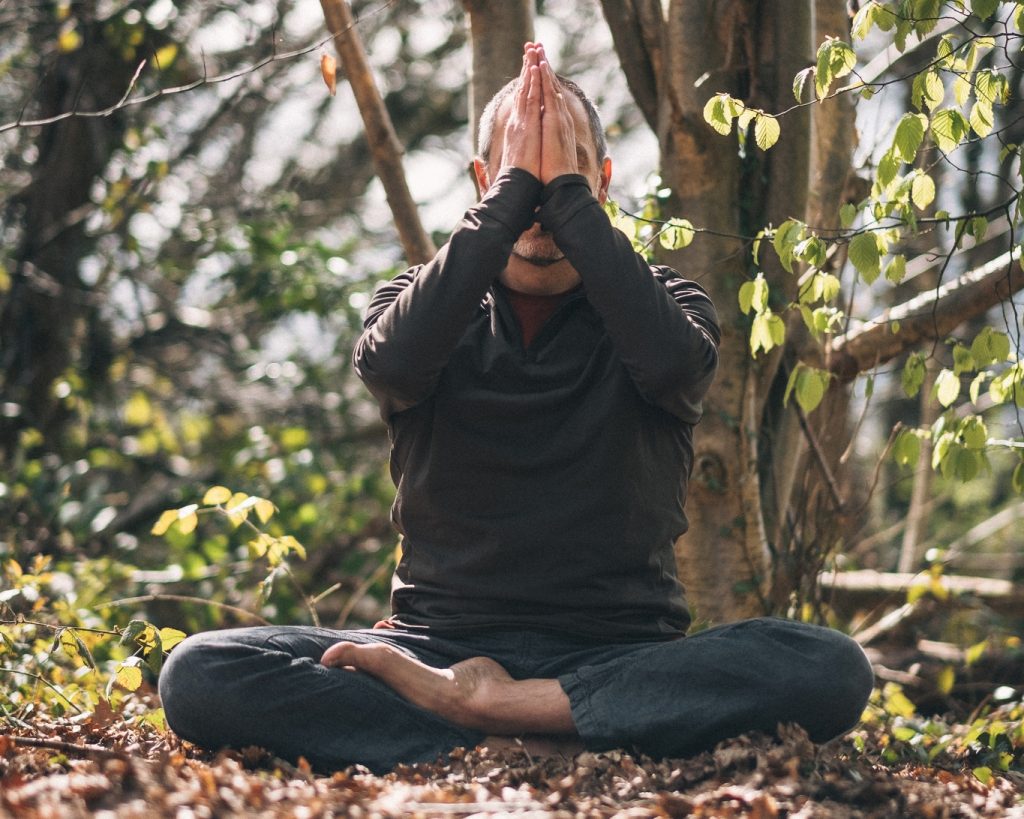
“Be still and know… thyself” is a confluence of sayings that sums up the power of meditation.
Strictly speaking, meditation is not one single thing. It’s a process. In the Yoga Sutras of Patanjali, the meditative path is described as unfolding in three stages, each of which can take many years to mature. The first of these stages is dharana — the practice of learning to focus attention.
By the way, if you are curious about meditation, come along to any of my sessions to experience it. The only rule is, don’t tell me you can’t meditate because your mind is too busy.
In simple terms, this means placing awareness on an object: the breath, sensations in the body, a sacred word, or a mantra. The practice isn’t about holding concentration perfectly. It’s about noticing when the mind has wandered (which it will), and gently bringing it back again. In Buddhist traditions, this is often called mindfulness.
For many people, this is where things fall apart. They sit down, notice how busy, distracted, and scattered their mind is, and conclude: I can’t meditate. But that busyness isn’t a failure — it’s the point. Becoming aware of the mind’s habits, and repeatedly returning attention, is the practice. It’s the first real step in knowing yourself.
In the 1970s, Father Thomas Keating, a Trappist monk, co-developed a Christian contemplative practice known as centering prayer. Don’t let the word “prayer” put you off if organised religion isn’t your thing. At its heart, this is a simple, quiet meditative practice, informed in part by transcendental meditation.
In centering prayer, we sit comfortably and allow the body and mind to settle. After a short period, a word or short phrase is gently introduced internally — something meaningful, calming, or sacred to you. It might come from a religious tradition, or it might be as simple as ‘be calm‘ or ‘be relaxed‘. Yogi’s may choose ‘So Ham’.
At the beginning of the session, after settling for 15 seconds or so, the word is repeated three or four times, then released. Each time the mind becomes caught up in thoughts or distractions, the word is softly reintroduced – just once – to guide awareness back to stillness.
Settle on a word and use that same word each time. With repeated practice the word becomes imbued with energy which can sum up all of your spiritual or religious beliefs in an instant. I like to notice how the mind attempts to shop around for other words as if it’s at a spiritual shopping mall. That in itself is an insight into how the mind works.
The practice lasts around 20 to 25 minutes and is traditionally done twice a day. Over time, something subtle but powerful happens. Thoughts don’t necessarily stop, but you stop identifying with them. The mind quietens, not by force, but by familiarity.
There’s a lovely story from an early centering prayer session. A nun told Father Keating that during her practice, her mind wandered 10,000 times in 20 minutes. His response was simple: ‘How wonderful — that’s 10,000 opportunities to come back to God’.
It’s a truly spiritual practice and one that does not require any religious beliefs.
If you’d like to experience centering prayer for yourself, I’ll be sharing the practice at my yoga workshop Finding Calm in a Hectic World, on Saturday 28th February 2026 at 2pm.
You can click here to find out more, or feel free to get in touch if you’d like a chat first.
My top tip for any meditation practice is this – keep it simple and don’t build it up into anything special. It’s about sitting quietly on a regular basis, with awareness, and noticing when the awareness gets lost in thought. When that happens, come back and begin again.